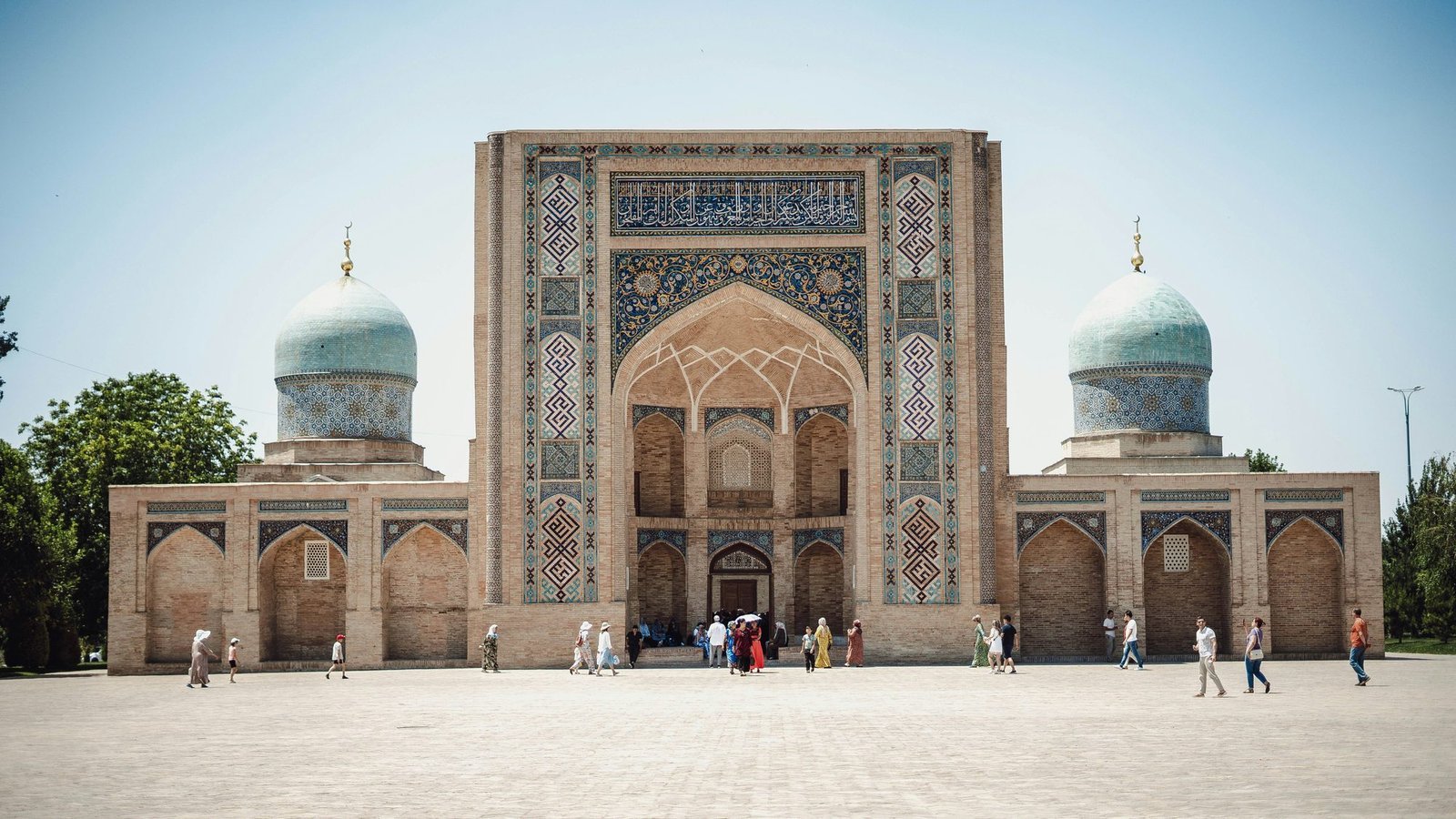
UZBEKISTAN · SILK ROAD
The complete guide to visiting Tashkent
Central Asia's biggest city is the gateway to the Silk Road — turquoise-domed madrasas, the world's most beautiful metro, and the launchpad for Samarkand, Bukhara and Khiva.
Start here
Seven guides covering the city and everything within day-trip reach.
Things to Do
The sights that anchor a first visit — the old city, the market, the metro, and the new monuments rising along the canal.
Explore →BEYOND THE CITYDay Trips & Beyond
Most travellers use Tashkent as a launchpad. Fast trains and short drives reach the great Silk Road cities and the Tian Shan foothills.
Explore →PRACTICALITIESPlan Your Trip
Visas, money, getting around, the metro, and when to come.
Explore →Tashkent is where almost every trip to Uzbekistan begins. It is the country's capital and by far its largest city — a place of wide Soviet boulevards, leafy squares, a metro worth riding for its own sake, and an old quarter where the call to prayer still drifts over low mud-walled lanes. Most travellers treat it as a one-night stop before the fast train to Samarkand. That is a mistake worth correcting: give Tashkent a full day or two and it rewards you.
This guide is built around how people actually visit. Start with the top things to do — the Hazrat Imam complex, Chorsu Bazaar and the metro are the three you should not miss. Then plan the bigger picture: the day trips to the great Silk Road cities are, for many travellers, the real reason Tashkent matters.
If you only read three pages
Read Visa & Entry first — most visitors now enter visa-free, and the page settles who qualifies. Then Using the Metro, because the metro is both the easiest way around the city and a sight in itself. Then Samarkand from Tashkent, which is the single most popular thing travellers do from the capital and needs booking ahead.
The shape of a good visit
A pattern that works: arrive and settle near the centre or by the old city; spend a morning on the Hazrat Imam square and Chorsu Bazaar, then lunch on plov at one of the plov centres; ride the metro between sights in the afternoon; and keep a full day free for Samarkand by fast train. With more time, add Bukhara or a mountain day at Chimgan and Charvak.
Everything on the site
Things to Do
The sights that anchor a first visit — the old city, the market, the metro, and the new monuments rising along the canal.
Open →THE OLD QUARTEROld City & Islamic Tashkent
Madrasas, mosques and the low mud-walled mahallas that survived the Soviet rebuild.
Open →HOTELS & AREASWhere to Stay
Which neighbourhood suits your trip, and the hotels worth booking in each.
Open →EATING IN TASHKENTFood & Drink
Plov by the cauldron, Central Asian classics, and where the city actually eats.
Open →BEYOND THE CITYDay Trips & Beyond
Most travellers use Tashkent as a launchpad. Fast trains and short drives reach the great Silk Road cities and the Tian Shan foothills.
Open →PRACTICALITIESPlan Your Trip
Visas, money, getting around, the metro, and when to come.
Open →BACKGROUNDHistory & Culture
How a Silk Road oasis became a Soviet showpiece and an independent capital.
Open →Frequently asked questions
How many days do you need in Tashkent?
One full day covers the essentials — the Hazrat Imam square, Chorsu Bazaar, a few metro stations and a plov lunch. Two days lets you slow down and add the museums or a half-day in the old-town mahallas. Most travellers then use Tashkent as a base for day trips, so budget extra nights for Samarkand and beyond.
Is Tashkent worth visiting, or just a transit stop?
It is worth a day or two in its own right. Tashkent will not out-dazzle Samarkand or Bukhara on monuments, but it has the country's best museums, its most atmospheric market, the famous metro, and the easiest food scene to dive into. It also has the best transport links for everywhere else.
Is Tashkent safe for tourists?
Tashkent is generally very safe for visitors, with low rates of crime against tourists and a visible, helpful police presence. Standard city precautions apply. See our [Getting Around](/plan-your-trip/getting-around) page for using taxis and the metro confidently.